Posts

The Power of Ignorance: Turning What You Don’t Know Into an Advantage

I’m ignorant. There, I said it. It feels great to get that off my chest. I started a new role at Autodesk 8 months ago, knowing next to nothing about 3D design, additive manufacturing, CFD, BIM, or even the company's flagship products like AutoCAD. Why am I in such a celebratory mood about this? Because this very lack of knowledge, plus what seems like a lifetime in open source & community, has prepared me to look at things from a different (and much wider) perspective. This is an important component of my job, and I believe nearly anyone can learn a lot from this approach. Anthony K. Tjan said it best in a 2010 Harvard Business Review article : If desperation is the mother of innovation, then ignorance might be its father. Let me be clear that ignorance is the starting point, and if you never move past that, it does you no good. But, ignorance, combined with a drive to become enlightened, is the recipe for mastery of anything. Learning how to ask great questions is k...
Polishing Cars Wasn't In My Job Description

­"Whose turn is it to prep the JavaCar demo?" I asked my colleague. As I suspected, the answer was, "Yours!" However, I wasn't too disappointed, as I was happy to show off what my team at Sun Microsystems Labs had built. Our JavaCar was well ahead of its time—a vehicle testbed for in-car networking, telematics, and infotainment, all before those concepts existed in the mainstream. So, I set about carefully starting the demo, as well as using a spray bottle to give the vehicle a quick wipedown before showing the car to another set of visiting executives. As I was doing this, I suddenly thought back over the past six months of development—we were a three-person team inside of the research organization, yet we'd garnered code contributions from over 15 different individuals throughout multiple teams in the company to make this demo a reality. While I didn't think too much more about it that day, that project had propelled me into a career in open so...

Aim to Be an Open Source Zero

My two biggest dreams growing up were to be either a firefighter or a space explorer. Though I didn’t get to do either of those things, I satisfy the former via being a volunteer in prevention with Cal Fire, California’s state fire department, and the latter by reading everything I can get my hands on about space—both fiction and non-fiction. I recently picked up Col. Chris Hadfield’s book about life as an astronaut, An Astronaut’s Guide to Life on Earth , and began reading it during one of my international trips to Asia. Besides being a fascinating read (I highly recommend it), it has also been enlightening as I think about how I can do my own job better and counsel internal developers and Samsung as a whole on doing a better job in open source. Aim to be a zero In chapter 9 of the book, Hadfield writes: “In any new situation…you will almost certainly be viewed in one of three ways. As a minus one: actively harmful, someone who creates problems. Or as a zero: your impact is ...

Does Your Community Shine in Bad Times?

Image
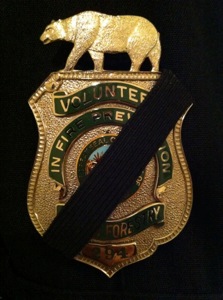
I've built several communities and been a part of many others during the course of my career, including some that have nothing to do with software and technology. Unfortunately, two communities I've been a part of have recently suffered devastating losses.  Not long ago, I wrote about my friend Greg Junell , and what he meant to a community of college kids who've now grown up and gone on to do many amazing things.  Just this past Saturday, my Cal Fire community lost an amazing member in the line of duty, Chief Rob Van Wormer .  He was the head of the fire prevention battalion at the Cal Fire Santa Clara Unit, which includes the group I volunteer with - the Volunteers in Prevention (VIPs).  The chief was a vocal and strong supporter of our volunteer team, and the many functions we perform for the department, including emergency radio communications, fire lookout staffing, public education programs, and media center operations (fielding calls during a major fire). ...

In Memorium - Greg Junell

Image
"You never forget your first _____" This phrase, with the blank filled in, is often used while looking back fondly at something you experienced that still touches your soul - and so, it's true of me today as I reflect on the loss of an amazing person - Greg Junell.  Who, you might be asking, is Greg Junell? Greg Junell - 2011 Greg was and still is the heart and soul of my very first experience with community.  We didn't call it 'community' back then, but looking back on it now, the slo.punks was the first community I can remember being welcomed into with no reservations.  When you are a teenager away from home for the first time, experiencing college at a very competitive school like Cal Poly , San Luis Obispo, life can be scary, awkward, and downright difficult.  Though 'The Punks' (think Cyberpunk, not punk rock) didn't have formal leadership per se, Greg was the closest thing they had to a community shepherd. Even now, I think back t...

Finding Your Community Magic

Image
'Festival Magic' I've heard this phrase for the past 8 years while serving with an amazing group of 4000 volunteers who put on the Gilroy Garlic Festival  - lauded by most as the premier food and entertainment festival on the West Coast.  While the saying started out as a bit of a joke to explain how things get done, the reality is those two words are the bedrock of an annual event that has been taking place for almost 35 years. The history of the festival is long and storied - this video gives a great overview.  However, the elements behind the concept of 'Festival Magic' are applicable to communities of all types, whether it's open source software development, social media communities, or affinity groups.  This 'magic' isn't really all that magical - it breaks down to the following main ideas: Empower Everyone to Lead Gilroy Garlic Festival volunteers are expected to lead (and follow) at all levels of the organization.  Even the most jun...

Confessions of an Open Source Community Pragmatist

I just recently wrote a post talking about job titles , which got me thinking of how I would classify my current career role.  That, combined with other discussions which have been happening inside the walls of my employer, made me realize that the best way to describe myself would be as an Open Source Community Pragmatist. I can see the heads shaking, the puzzled looks, and even the sighs from some of my colleagues who are a bit more on the idealistic side when it comes to these topics.  Let me assure you, I have total respect for those folks who make everything they do in life about the ideology - it's just not the path I've chosen for my career, and here's why: The vast majority of the day-to-day work of society & business happens between the ideological extremes: Conservatives vs. liberals Proprietary vs. open source software Emacs vs. vi (a little inside joke for my technology readers) Does this mean that we don't need the extremes?  No, I think they...

Community Manager or Community Sherpa?

What's in a title? While a lot of us community types don't get caught up in what you call us (we prefer to be catalysts in getting the job done), the fact remains that those outside of our sphere sometimes fixate a bit too much on the word 'manager' in our typical title.  In point of fact, some of the most successful community people I've run across are closer to a community 'sherpa' than they are to a community 'manager.'  What is the difference, you might ask, and does this mean that they don't perform typical 'management' tasks? The answer to the second part of that question is no - in fact, they can and do step in to get their hands dirty on tactical tasks (moderating forums, building content, refereeing competing interests) all the time.  However, building an effective community requires someone who is also fairly strategic (the 'sherpa').  This strategy comes to the forefront in areas such as charting the community directi...

On Fatherhood, Technology & Community

Today, November 18th, 2011 is a very special day for my family - it's the day we 'officially' welcomed our newest addition (Rachel Elizabeth Martin) into our lives! Her adoption was finalized today, and it marks the culmination of one journey, and the beginning of a bigger one. Our family is incredibly lucky to have 'one in college (my son Mathew), and one in diapers.' :) So, readers of this blog might now be wondering 'Ok Guy, where's the technology and community in this news?' Of course, you knew I was going to tell you, right? :) Simply put, technology helped save my daughter's life when she was just 9 days old, and it was also at the heart of our journey to her. As far as community goes, well, that was what helped her get through her first month of life in a NICU (Neo-natal Intensive Care Unit), and it also helped my wife and me navigate the sometimes maddening road to adoption. Let's start with the technology and community that helped...

Is Bruce Bochy a Community Manager?

As an avid baseball fan, I love to go root on my beloved SF Giants (and a World Series victory last year was just an awesome gift to go along with my new baby daughter!) One of the things you hear at a major league ballpark is vendors hawking programs or in-stadium magazines with line up cards: 'Get your program, program here, can't tell the players without a program!' All of this got me thinking about the different roles in successful tech development communities. These kinds of communities, not unlike your baseball line up of 'lead off hitter,' 'cleanup hitter,' etc., have important players as well. So, with that in mind, I'd like to build out a 'Technology Development Community Lineup,' complete with players, their respective roles and a brief 'scouting report' on each of them. So, let's play ball! Leading off - Product Visionary: This person's role, like a leadoff hitter, is to get on base with an idea or a vision of how to...

Community Perspective

[Originally posted 11/17/09 in my work blog, but it still rings true today] It’s amazing how restricting the amount of space you have to express a concept crystalizes what is truly important about that idea. Recently, in my ‘community’ Twitter list, Holly Seddon asked a very good question which helped give me one of those ‘A-ha’ moments: ‘In one word, what should using an online community feel like or give you?’ I loved the challenge of coming up with a single word to describe a key benefit to participating in community. After some reflection, the word that popped into my head was ‘perspective’. When communities are functioning at their peak (and I think this is true even of ‘development’ communities), one of the most powerful things you can glean from your participation is the perspective of one or more of the other community members. Being able to look at business problems, source code issues, or any other medium within a community from a different angle is incredibly powerful. As ...

Salespeople are from Mars - Consultants are from Venus

Image
I hope that title caught your eye because it is a great jumping off point for something that has become readily apparent to me in the last several years of my career. Now that I'm in a consulting role (services) as opposed to previous internal development roles, I've begun to get a new appreciation for just how different the sales and services/consulting camps are. In addition, I've seen how Dr. John Gray's provocative metaphor, first brought to light in his book 'Men are from Mars, Women are from Venus,' also applies to what many perceive are diametrically opposed groups in any community. Now, don't get me wrong, there usually is (by necessity) a LOT of synergy between any of these two camps, but there is also a fundamental mindset difference that can easily throw an unproductive wedge between the two groups. I'll admit that I'm as guilty as the next person for not always recognizing this, and I'm sure it doesn't help that as a former so...

When Do You Weed Your Community Garden?

Image
Anyone who has ever grown anything in their home garden knows that at some point or another, the onerous task of weeding will become a part of your reality. The question usually becomes when to take on the task that most of us don’t look forward to. In recent discussions with colleagues and customers, I’ve revisited my list of traits that a good community manager should have – and I’d like to amend the list to include ‘community gardener.’ The gist of these discussions has been how much influence a community manager should exert and where in the process of the community workflow that needs to happen. Let’s face it – to have an effective community (one that provides value for both the producers and consumers of content), there is a certain amount of ‘weeding’ that has to happen, whether by the community itself, or by the community manager. This task can either be relatively painless or a pain-filled experience, depending on where in the process it occurs. In general, I see weeding happe...

Hey, Your Community Peanut Butter Is in My Agile Chocolate!

Image
Ever since my first introduction to Agile software development (at the beginning of the Forge.mil project nearly two years ago), I've been noodling with the notion of how my primary role (Community Management) interfaces with and informs Agile. At first, it almost seemed like the beginning of the old Reese's ® Peanut Butter Cup commercial ('Hey, your community is in my Agile!'), but as I've had time to consider it, I think that community has a lot to do with the successful application of Agile methodologies. The culmination of this came when I was asked to speak on a panel at the recent AFEI DoD Agile conference , and the panel moderator asked us in our pre-show meeting to consider a 'lead-in' question he could give each of us in case the audience didn't have ready-made questions. I chose to have him ask me, 'How does the notion of community inform Agile software development?' In preparing my answer, I thought of three specific areas where ...

Government Software Pedigree (a.k.a. Why We Need Forge.gov)

[Note: edited 9/8/10 to clear up misconceptions about my involvement in Forge.gov] I'd like to talk today about why a system similar to Forge.mil is a good idea for Federal government civilian agencies. I'll preface this with full disclosure: I work for CollabNet , the main infrastructure provider for Forge.mil . The CollabNet TeamForge product is the 'glue' underlying Forge.mil, but it allows for additional services to be 'plugged in' in the future. My role in Forge.mil is that of a community management consultant (and part-time day-to-day community manager). Despite the fact that the GSA (General Services Administration) is looking to the DoD (specifically DISA ) to help them replicate the success of Forge.mil, the main point here is not to sell TeamForge, but, instead, to make customers and communities successful from a cultural and process standpoint. Therefore, I'm posting this here for neutrality rather than at the ' OnCollabnet ' blog....

Community Is...

Image
[This was originally posted on my work blog ' OnCollabNet '] I just returned from a two week conference trip in support of Forge.mil - the first week in Utah was uneventful, but the second week for the DISA partner conference in Nashville, TN at the historic Gaylord Opryland Hotel ... well, let's just say it was something I don't think any of us involved will ever forget. For those that may not have been following the news, Nashville got 18 inches of rain in just two days (an all-time record) and those of us in town for the conference were evacuated from the hotel to a local high school due to severe flooding . Though I was one of the folks living through this, I'd like to highlight some of the things I saw and experienced that, to me, showcase the true meaning and spirit of community. We deal in my world with community in a somewhat abstract sense, because we are talking about online interactions. However, I'm here to tell you, I saw some amazing, simple,...

The Power of the Open Source Periphery

Like a lot of people in the tech world, I try to read a variety of publications (both online and physical versions) to keep up with what is going on in the dizzying world of technology. Recently, I read a great article in a recent issue of Wired entitled Accept Defeat: The Neuroscience of Screwing Up . This article explains in some detail, with examples, the problem of 'failure blindness' in scientific research. This phenomenon causes scientists and researchers to ignore anomalies in their results they didn't expect, which are therefore categorized as 'failures'. The article goes on to state that one of the best ways of overcoming this bias is to involve other people from outside of your immediate speciality in discussions about your results. For me, this triggered the thought process of why it's important to encourage participation in your communities (Open Source or internal) from folks on the periphery of your project - non-specialists who have somethin...

Putting the 'Social' Back in Social Media

I've seen a lot of information recently in social media spaces and RSS feeds I follow that portends a bit of a change in the way people approach social media, and the inevitable ' information overload ' we've all heard so much about. A lot of people compare today's information environment to a stream, and I think that's a very apt analogy. There are two primary ways that people seem to be reacting to this glut of information: more filtering or scaling back who they attempt to have 'relationships' with online. I honestly believe the answer to this dilemma is to incorporate both approaches. In a nutshell, the way I've always approached 'social media' is to remember first and foremost, it's about people and relationships, not about how high you can drive your Twitter, LinkedIn, FriendFeed, or Facebook follower count. It's also important to utilize tools to help you filter out the most important pieces of information. One of the most...

Community Management is a Career, Not a Job

'Community Management' is a hot topic, & a hot job field , but I think it's important to articulate that it's not a role which should be approached as a 'job'. What do I mean by that? Community Management should NOT be: A role you 'settle' for because you can't do other things Something you do as an ancillary part of your 'real job' Something you get into 'because it's hot right now' A position that you can perform in isolation, without constant upgrading of your skills/knowledge I've talked in the past about what kinds of skill sets I believe are necessary to be an effective community manager, and as I thought about my own career path, I realized that early on in my community management career, I considered myself an engineer doing community management, whereas I now think of myself as a community manager with an engineering background. It is a subtle, yet hugely important difference - one that allows me to draw on a...

The Red Herring of Open Source Licensing

There has been a lot of drum beating of late on the topic of the increasing irrelevance of Open Source licensing, & the loudest drummers seem to be Tim O'Reilly & Matt Asay . Matt's recent blog post touches on some great points in this discussion, not the least of which is: "The real value in open-source software is no longer the software, but rather the resultant services that are delivered over the Web" This is spot on, and we (the industry) need to move beyond the 'licensing hiccup' that seems to permeate every conversation we have around Open Source (especially in government & enterprise). While I'll preface my statements with the standard disclaimer of ' IANAL ', for 'community source', or ' innersourcing ' discussions, I think that everyone gets way too wound around the axle on what the license is, and the relative merits of each possible alternative. I completely agree with Matt's point about the licenses ...